

Packing List for Multi-Day Festivals: What Attendees Actually Bring
Packing List for Multi-Day Festivals: What Seasoned Attendees Actually Bring
Sponsored post by TFV Guest Contributor.
Anyone who has spent three or four days camping at a festival knows the difference between packing lists you make at home versus the ones you wish you had actually brought. The first list is rosy and optimistic. The second is shaped by sunburns, broken poles for tents, and phones that die before headliners perform. Regular festival goers tend to converge on a similar kit over time rather than focusing on fancy gadgets; they focus on small items that really solve practical problems onsite.
Shelter and Sleep
Tent selection is the biggest call. Solo visitors often find two-person dome tents to be ideal because there is room next to sleeping mats for backpacks. If rain is possible, look for a flysheet with a hydrostatic head rating of at least 3000 mm; most summer festivals in Europe and the US qualify. Cheaper tents rated at 1500 mm will definitely leak during a long steady rain. Sleep mats rated around R 2 to 3 are sufficient for summer nights, and a sleeping bag rated to comfort temperatures around 50 degrees Fahrenheit or 10 degrees Celsius usually works for July and August events. Earplugs matter more than newcomers usually realize. Foam plugs with SNR above 30 dB let you sleep through neighboring campsites at 4 in the morning without blocking alarms. Knowing where covered areas are on site is important if the forecast changes and the site floods. Courts for food, hospitality tents and modular event structures used for lounges usually stay open during rain and provide a dry place to wait it out.
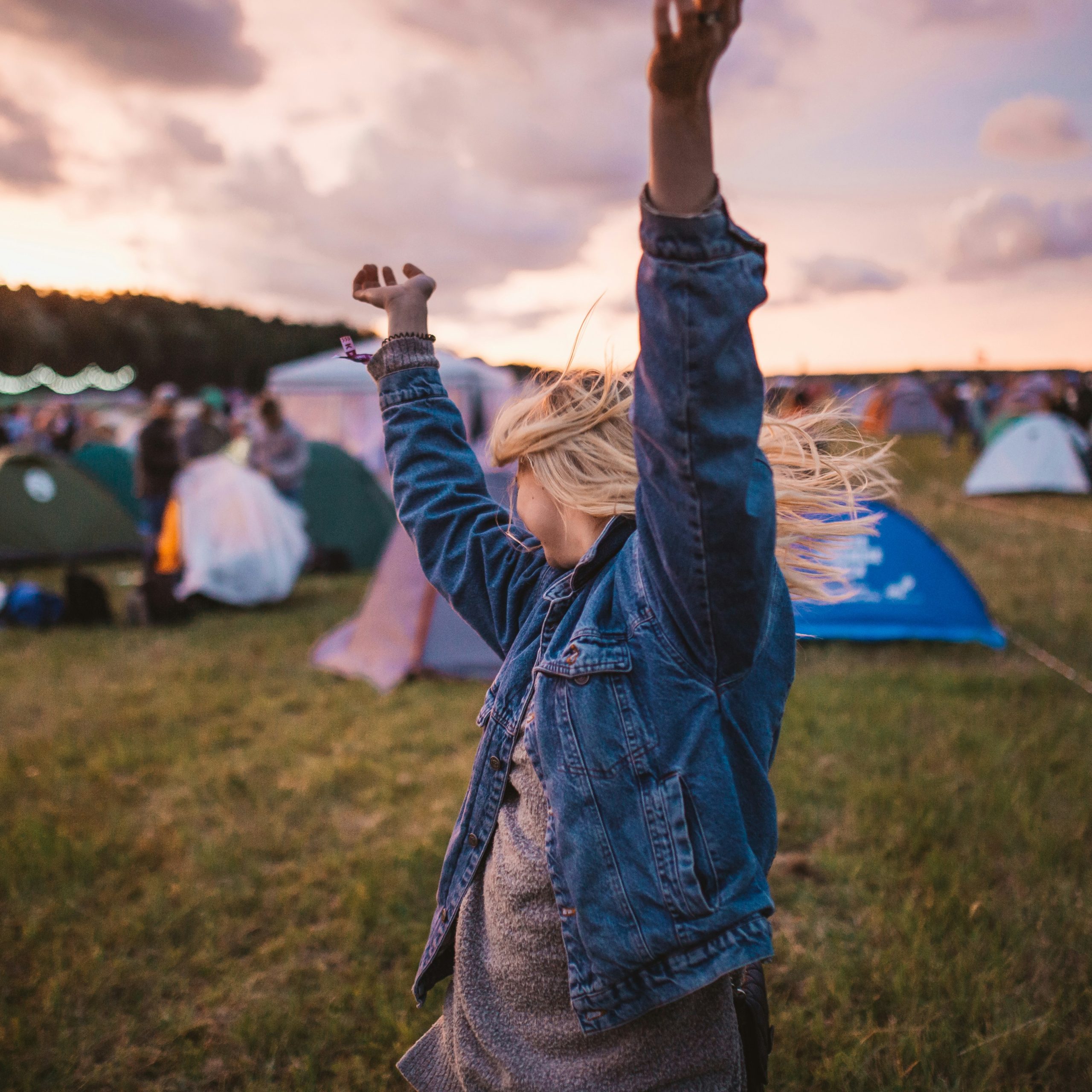
Photo by Krists Luhaers on Unsplash
Clothing That Lasts Four Days
Layering beats bulk. Typical packing sets cover three temperature bands: warm afternoons, cool evenings, and a cold morning after the last set. Usually that means two or three t-shirts, one long sleeve, a hoodie or fleece, and a lightweight rain jacket with taped seams. Clothing-wise, most regular attendees switch to merino wool or synthetic base layers directly against the skin because cotton retains moisture for hours and stays damp. Footwear is where people underestimate the ground most. Campsites quickly turn into mud within hours of steady rain and open sandals become useless. Waterproof hiking shoes or boots with removable insoles work for both dry and wet conditions. Bring two pairs of socks a day if possible because dry feet prevent most blisters.
Water and Small Essentials
Most festivals allow sealed water bottles at entry and have refill stations inside. A one-liter reusable bottle covers a whole day if you top it up between sets. Electrolyte tablets are worth space too, especially when the temperature is above 82 degrees Farenheight or 28 degrees Celsius because plain water alone can leave you feeling drained. For food at campsite, instant oats, energy bars, and vacuum sealed bread last the weekend without refrigeration. Here are items that always come up on packing lists of experienced people:
- At least one power bank with at least 10,000 mAh capacity, enough to charge two phones
- Headlamp because paths at campsites rarely get well lit after midnight
- Sunscreen SPF 30 or higher that you need to reapply every two hours during peak sunlight
- A basic first aid kit with band aids, painkillers, and blister patches
- A microfiber towel that dries within an hour
- Cash in small denominations because some vendors onsite do not reliably accept cards